Anchor sector
Automotive components
Wiring harnesses, connectors and mechanical parts supplied to European OEMs from over 250 dedicated plants.

 Profile content in preparation
Engineering talent on the Mediterranean.
A compact, export-oriented economy with one of the highest engineering-graduate rates in Africa, supplying automotive components, electronics and olive oil to global markets.
Statistics year: 2024 (latest full-year data)
Tunisia built its economy on offshore manufacturing for Europe: wiring harnesses, connectors, electronic assemblies, medical devices and aeronautical components produced under a dedicated offshore regime.
It graduates tens of thousands of engineers and technicians each year, making engineering services and IT offshoring one of its fastest-growing exports.
Tunisia is also one of the world's largest olive oil producers, and increasingly exports bottled, branded and organic oil rather than bulk product.
Around 3,000 offshore companies manufacture in Tunisia for export, alongside a large agricultural sector and a recovering tourism industry.
Compact, export-driven economy
Manufacturing almost entirely for export
Among the world's largest producers
Recovered to record levels
Sectors where Tunisian manufacturers and service firms compete on quality, cost and proximity.
Wiring harnesses, connectors and mechanical parts supplied to European OEMs from over 250 dedicated plants.
Precision assembly, PCB manufacturing and certified medical-device production for regulated markets.
Extra-virgin, organic and branded olive oil, dates, harissa and seafood with premium export channels.
Software development, CAD engineering and multilingual services at a fraction of European rates.
Apparel plus workwear, medical textiles and technical fabrics for European buyers.
Solar and wind tenders under a national plan to raise renewables to 35% of electricity by 2030.
Tunisia's economic agenda focuses on moving up the manufacturing value chain, expanding renewables and growing digital services exports.
A dedicated legal framework for export-only manufacturing attracts European industry.
Tariff-free industrial trade with the European Union.
Large utility-scale solar concessions awarded to international developers.
35% of electricity generation from renewable sources.
Infrastructure and energy programmes with international participation.
A high-voltage subsea power link between Tunisia and Italy enabling renewable electricity exports to Europe.
Multi-hundred-megawatt solar concessions across the centre and south of the country.
Container-handling modernisation at the country's principal commercial port.
Corridor upgrades linking the capital to the industrial south.
The United States supplies Tunisia with grain, aircraft and machinery, while Tunisian olive oil and dates have become established categories in US retail.
Verified full-year bilateral merchandise trade between Tunisia and the United States, reported from Tunisia's perspective.
Tunisia holds a goods surplus with the United States, powered by olive oil, electrical components and apparel exports, while American sales are concentrated in grains, oilseeds and machinery.
These figures represent merchandise trade only and do not include services.
Statistical year: 2024
Roman antiquity, desert landscapes and 1,300 km of Mediterranean coastline.
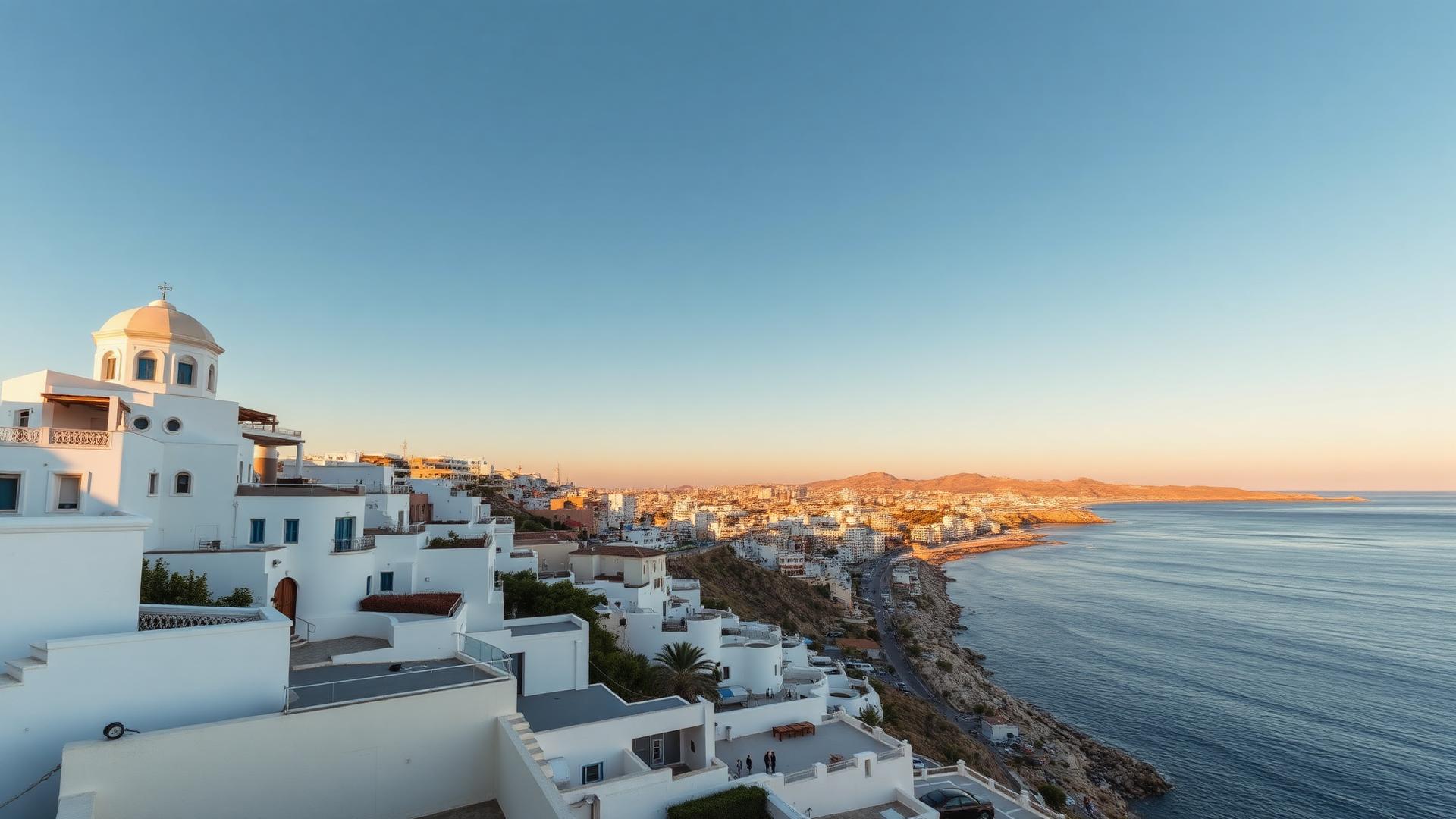
Phoenician and Roman ruins beside a blue-and-white clifftop village.
One of the largest and best-preserved Roman amphitheatres in the world.
An island of beaches, synagogues and traditional craft villages.
Palm oases, salt flats and desert film locations.
One of Islam's most historically significant cities.
European-grade manufacturing and engineering, one hour from Rome by air.
Export-only companies benefit from tax advantages, duty-free inputs and simplified customs.
One of the highest per-capita rates of engineering graduates in Africa.
Manufacturing and technical labour costs well below European and Turkish alternatives.
Aerospace, automotive and medical-device plants operating to international certification standards.
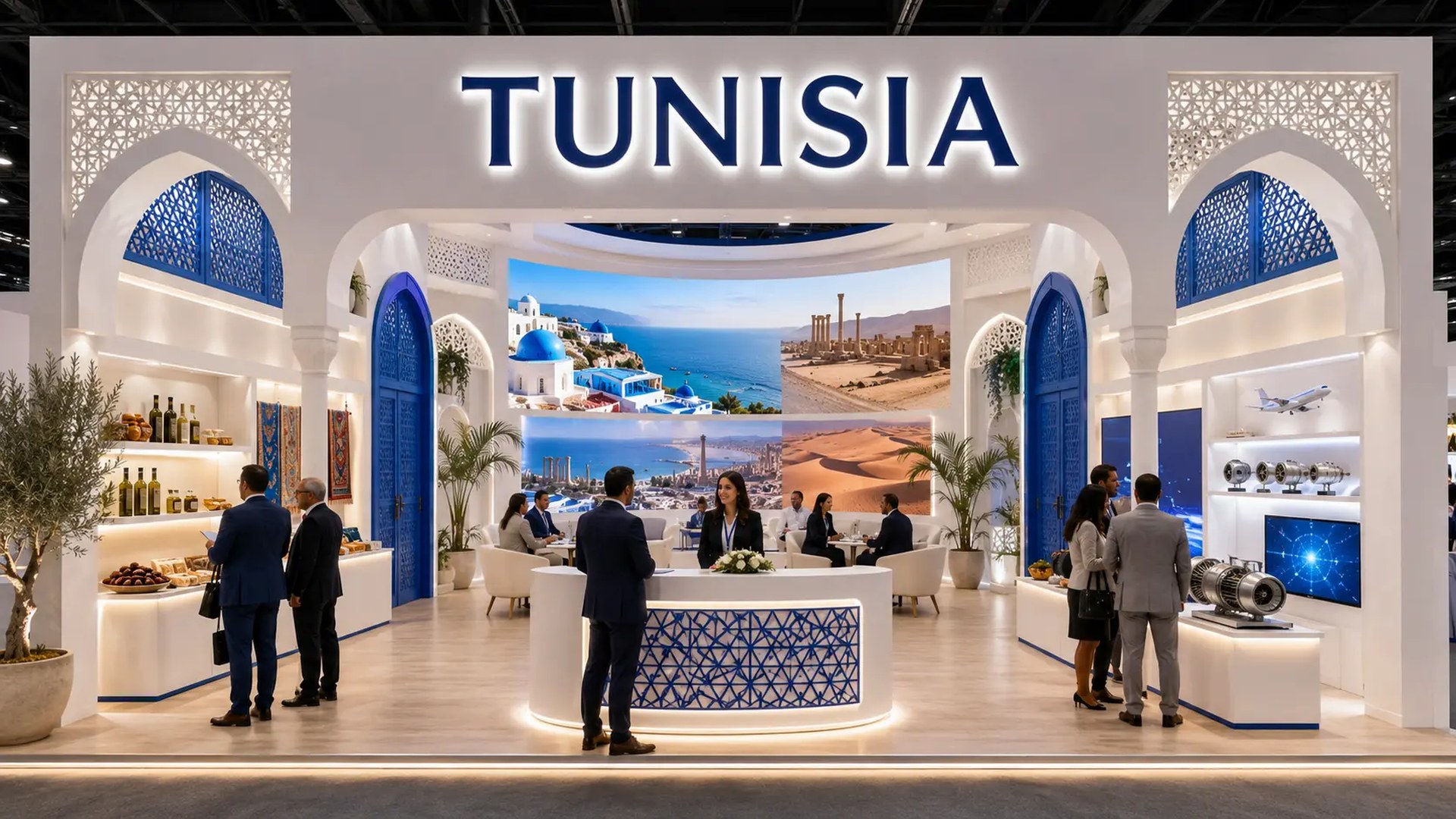
The Tunisia pavilion introduces American buyers to certified manufacturers and premium food producers.
Sites inscribed on the UNESCO World Heritage List, a core part of the country's cultural and tourism offer.
The Phoenician and Roman capital on the Gulf of Tunis.
A 3rd-century Roman amphitheatre seating an estimated 35,000.
A 700-building historic core of mosques, palaces and souks.
The first Arab-Muslim city in North Africa, with the Great Mosque of Uqba.
The best-preserved Roman small town in North Africa.
A well-preserved example of early Islamic coastal town planning.
How companies from different markets can engage with Tunisia through the Expo.
Source certified components and organic olive oil, or place engineering and software work with Tunisian teams.
Use Tunisia as a manufacturing platform with tariff-free access to the European Union.
Renewable energy concessions, the ELMED interconnector and port modernisation offer structured entry points.
Present your country's economy, industries, products, investment opportunities, tourism destinations and culture to the American and North American markets.
Reserve space in the Tunisian pavilion, or register as an American buyer to source components, services and premium food products.
Last updated: August 2026