Gateway
Logistics & supply chain
Jebel Ali, Khalifa Port and global air-cargo capacity make the UAE the base for regional distribution and bonded warehousing.
 Profile content in preparation
The gateway to the Gulf.
A federation of seven emirates that turned open trade, world-class logistics and free zones into one of the most business-friendly economies on earth.
Statistics year: 2024 (latest full-year data)
The UAE is the most diversified economy in the Gulf, with non-oil sectors driving the majority of GDP — trade, logistics, tourism, finance, real estate, manufacturing and technology.
Dubai's Jebel Ali port and the region's largest air-cargo network make the country the natural distribution base for American exporters serving the Middle East, Africa and South Asia.
More than 40 free zones offer full foreign ownership, fast licensing and tax incentives, making market entry faster here than almost anywhere else in the region.
A high-income economy where non-oil activity leads growth, backed by two of the world's largest sovereign wealth funds.
Second-largest Arab economy
Trade, services and industry
ADIA, Mubadala, ADQ and others
Goods redistributed across MENA
Sectors where Emirati distributors, family groups and government buyers actively seek American suppliers.
Jebel Ali, Khalifa Port and global air-cargo capacity make the UAE the base for regional distribution and bonded warehousing.
Operation 300bn is scaling industrial output, with incentives for partners who assemble or localize production.
Enterprise cloud, artificial intelligence, cybersecurity and smart-government platforms across all seven emirates.
Private hospital groups and public health authorities importing devices, diagnostics and digital health systems.
A national food-security strategy driving imports, vertical farming and cold-chain investment.
Continuous residential, hospitality and infrastructure delivery across Dubai and Abu Dhabi.
The UAE plans in decades: doubling GDP, expanding non-oil exports and becoming a global hub for talent and technology.
A package of economic, investment and residency reforms opening the market further to foreign business.
Comprehensive economic partnership agreements signed with major markets to expand non-oil trade.
Large-scale commitments to renewables, hydrogen and clean industry.
Emirati companies meet American buyers, distributors and investors in Washington, D.C..
Targets to double GDP and raise non-oil exports substantially.
A long-term decarbonization plan across power, industry and transport.
Infrastructure and industrial programs creating direct procurement demand.
A national freight and passenger rail network linking ports, industrial zones and the wider GCC.
A long-term plan reshaping housing, green space and commercial districts across the emirate.
A ten-year industrial strategy to grow the manufacturing sector's contribution to GDP.
Global and domestic solar, wind and green-hydrogen capacity build-out.
A multi-phase airport expansion designed to become one of the world's largest passenger and cargo hubs.
The UAE has been the top destination for US exports in the Middle East for over a decade, with a large share re-exported onward across the region.
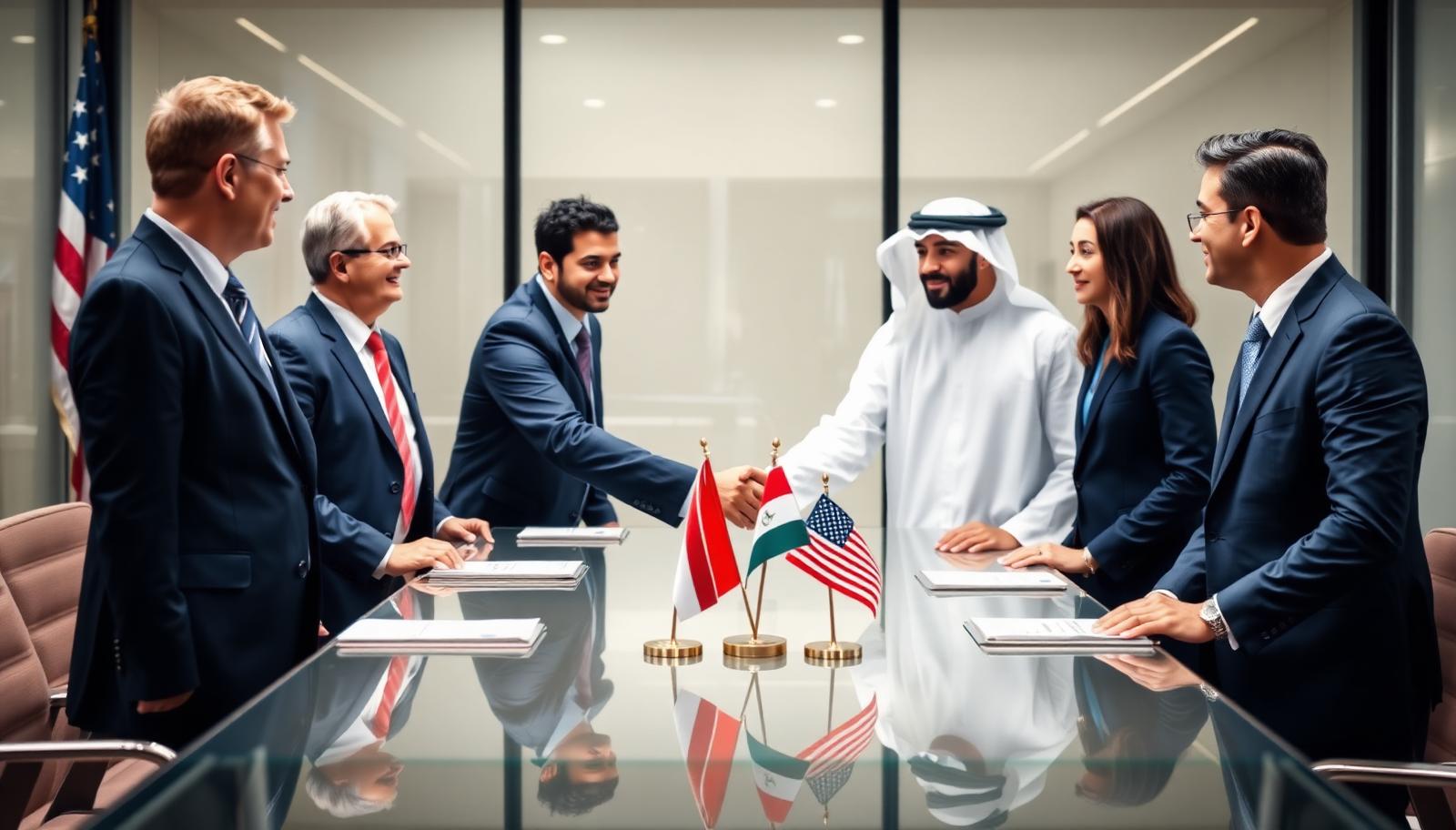
Verified full-year bilateral merchandise trade between United Arab Emirates and the United States, reported from United Arab Emirates's perspective.
The UAE is the largest single market for American goods in the Middle East and North Africa, and the relationship is strongly in the United States' favour — meaning a sizeable goods deficit for the UAE, driven by aerospace, machinery and consumer imports feeding both domestic demand and regional re-export flows.
These figures represent merchandise trade only and do not include services.
Statistical year: 2024
Beaches, desert, heritage districts and world-class retail, hospitality and museums.
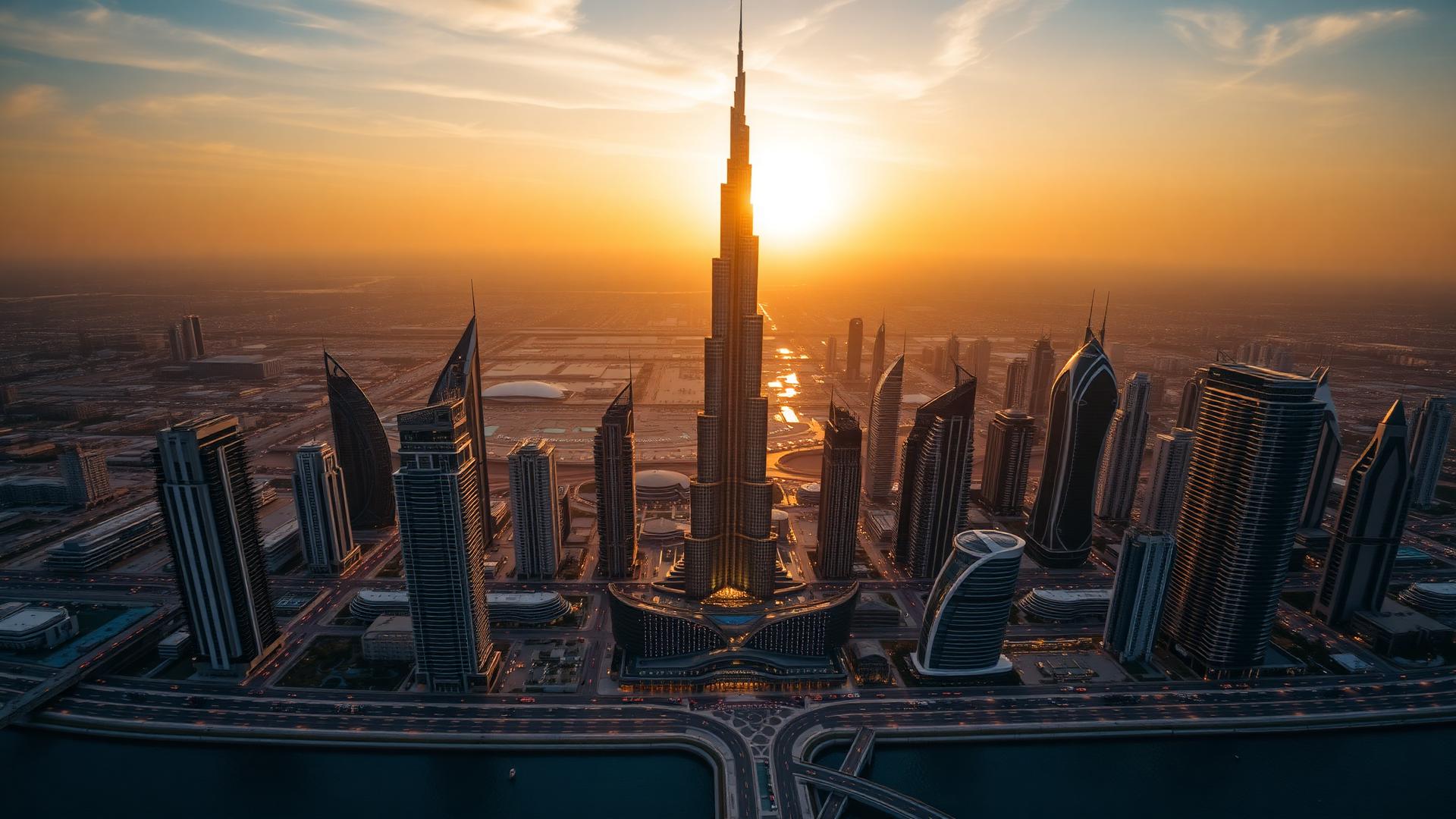
Burj Khalifa, Dubai Mall and the Opera District — the commercial and tourism heart of the city.
Louvre Abu Dhabi and a growing cluster of world-class museums on the coast.
Wind-tower houses, souks and the trading creek where the modern city began.
Vast dunes at the edge of the Rub' al Khali, with desert resorts and heritage festivals.
Jebel Jais peaks, adventure tourism and coastal resorts north of Dubai.
Museums, calligraphy and Islamic art in the UAE's designated cultural capital.
Speed of setup, connectivity and a genuinely international business culture.
Company formation in free zones can be completed in days, with full foreign ownership.
Two global airline hubs and the region's busiest container ports, serving Africa, Asia and Europe.
Contracts, banking and negotiation are conducted in English across most sectors.
Sovereign funds, family offices and family conglomerates actively seek international partners.
No personal income tax and free-zone regimes designed for exporters and regional HQs.
Political stability, strong rule of law for commercial matters and world-class infrastructure.
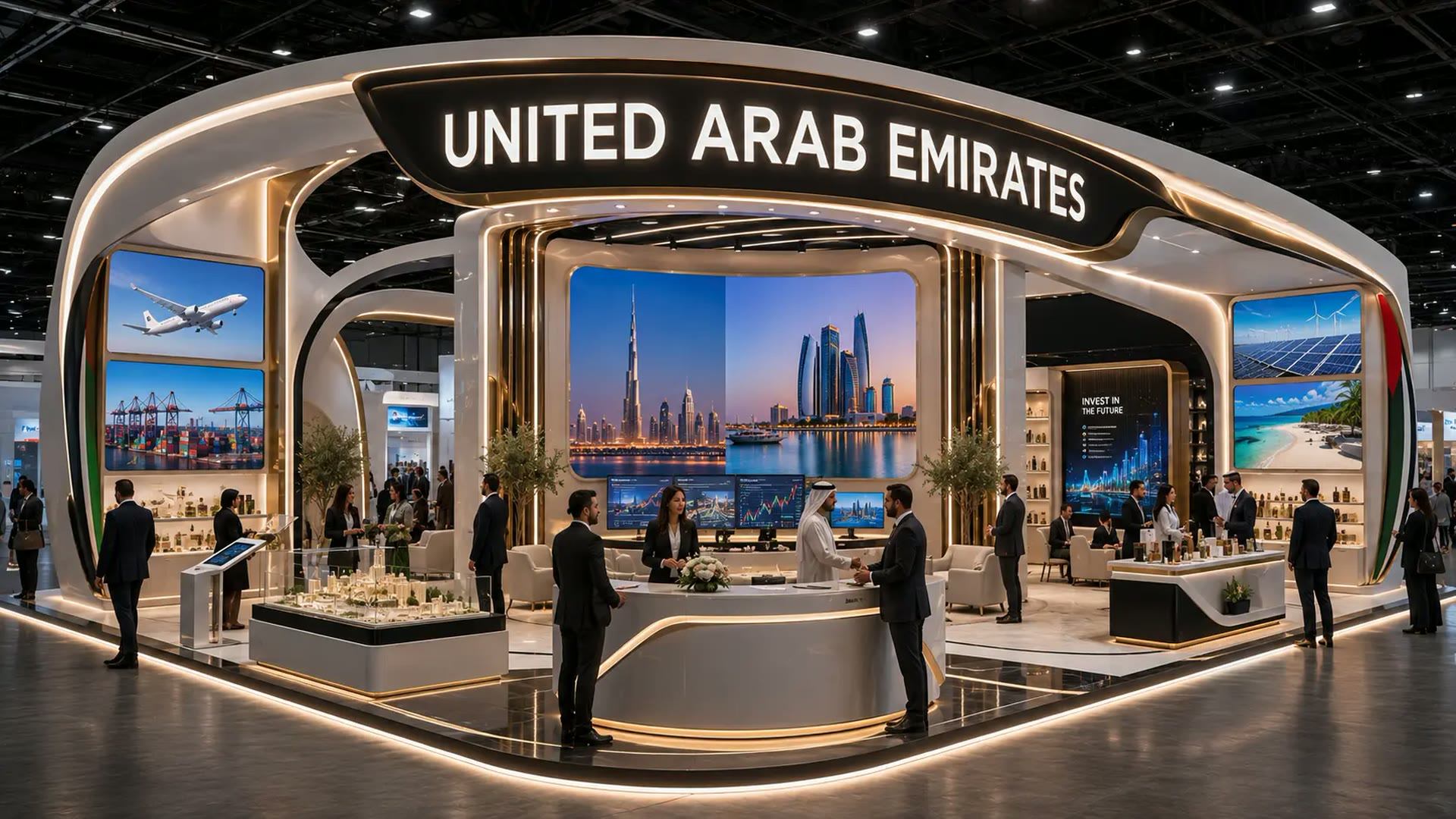
The Emirati pavilion will bring trading houses, free-zone authorities, manufacturers and technology firms directly to American partners in Washington, D.C..
Sites inscribed on the UNESCO World Heritage List, a core part of the country's cultural and tourism offer.
Hafit-period tombs, oases and falaj irrigation systems in the eastern emirate.
How companies from different markets can engage with United Arab Emirates through the Expo.
Establish a regional headquarters or distribution hub with duty-free re-export across MENA, Africa and South Asia.
Use UAE free zones for financing, trading and logistics operations across the region.
Real estate, logistics assets, technology ventures and sovereign co-investment through ADQ, Mubadala and others.
Present your country's economy, industries, products, investment opportunities, tourism destinations and culture to the American and North American markets.
Reserve space in the Emirati pavilion, or register as an American buyer to meet UAE distributors, investors and manufacturers.
Last updated: August 2026