Talent
Technology & engineering services
Software development, architecture and engineering teams serving US and Gulf clients at competitive rates.

 Profile content in preparation
Talent, diaspora and reinvention.
A highly educated, entrepreneurial Mediterranean economy with one of the world's most influential diasporas — and a substantial rebuilding agenda.
Statistics year: 2023 (latest verified full-year data)
Lebanese national accounts have been disrupted by the financial crisis and exchange-rate redenomination. Only verified prior-year figures are shown; no projections have been substituted.
Lebanon's economy has always been built on people rather than resources: banking, professional services, education, design, media and food.
Lebanese-Americans are one of the largest and most commercially successful Arab-origin communities in the United States, creating a natural bridge for trade and investment.
Reconstruction and reform create openings in energy, water, telecoms, agri-food processing and technology services — often executed by small, high-capability firms.
Lebanon's comparative advantage is skilled labour: engineers, designers, doctors and software developers serving regional and global clients.
Among the highest in the region
A major source of foreign currency
A deep technical labour pool
Wine, olive oil, produce, processed foods
Sectors where American companies find capability, cost advantage and cultural fluency.
Software development, architecture and engineering teams serving US and Gulf clients at competitive rates.
Wine, olive oil, preserves and Mediterranean specialty foods with growing US retail presence.
Generation, solar and grid rehabilitation are the country's most urgent infrastructure priority.
Hospitals and universities with regional reputations seeking equipment, systems and partnerships.
Fashion, architecture, advertising and production studios with international clients.
Treatment, distribution and waste-management projects across municipalities.
Lebanon's recovery agenda centers on power sector reform, banking restructuring and rebuilding the productive economy.
Catastrophic damage to the port and surrounding districts, triggering a reconstruction agenda.
A program of fiscal, banking and electricity-sector reforms agreed with international partners.
Rapid private adoption of distributed solar in response to grid shortfalls.
Restored public power supply, a rebuilt port and a re-anchored productive economy.
Rebuilding priorities with international participation.
Rebuilding container and grain-handling capacity at the country's principal gateway.
New generation capacity, metering and distribution reform to restore reliable supply.
One of the fastest per-capita solar adoption rates in the region, largely privately financed.
Municipal treatment and distribution upgrades across Beirut and Mount Lebanon.
The United States is a leading supplier to Lebanon, while Lebanese specialty foods and manufactured goods reach American shelves largely through diaspora networks.
Verified full-year bilateral merchandise trade between Lebanon and the United States, reported from Lebanon's perspective.
Latest verified data available
Lebanon remains a net importer of American goods, with fuels, vehicles and food products leading. Trade volumes stay well below their historical peak because of the country's financial and economic crisis.
Latest verified data available; Lebanese trade reporting remains affected by the ongoing economic crisis. These figures represent merchandise trade only and do not include services.
Statistical year: 2024
A country where you can ski and swim on the same day, with 5,000 years of layered history.
Among the largest and best-preserved Roman temple complexes in the world.
One of the oldest continuously inhabited cities on earth.
UNESCO-listed valley and the ancient cedar forests of Lebanon.
Capability and connection, at a cost base that is hard to match.
A highly educated, trilingual workforce with strong technical and creative skills.
Established Lebanese-American business networks reduce the cost of market entry in both directions.
Professional services and development talent at a fraction of US and Gulf rates.
Long-standing commercial relationships across the Gulf and West Africa.
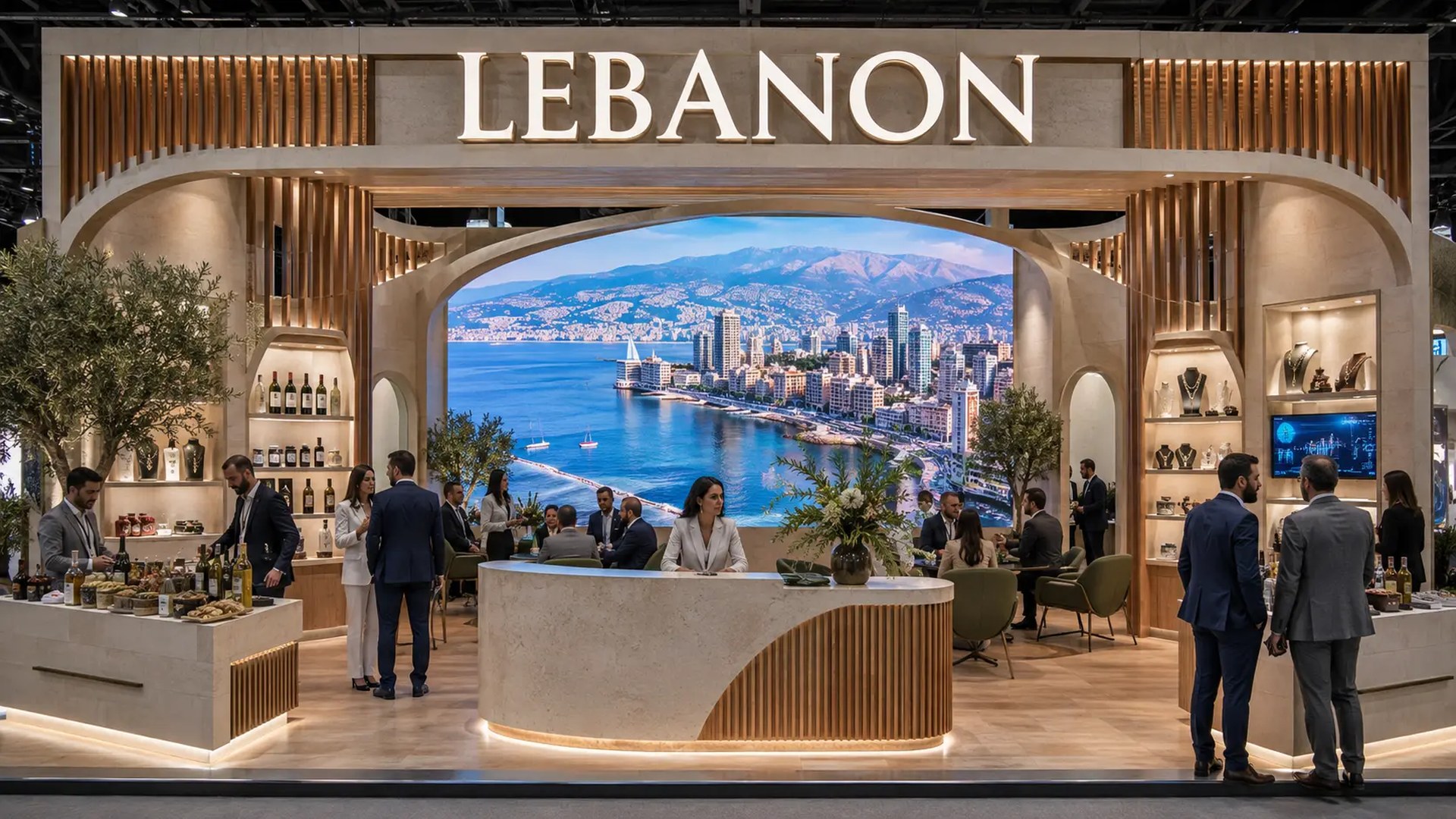
The Lebanon pavilion showcases talent, specialty exports and diaspora-led partnerships.
Sites inscribed on the UNESCO World Heritage List, a core part of the country's cultural and tourism offer.
Among the largest and best-preserved Roman temple complexes in the world.
One of the oldest continuously inhabited cities on earth.
A Phoenician maritime capital with extensive Roman remains.
An 8th-century Umayyad city in the Bekaa Valley.
A monastic valley and the last ancient cedar groves.
A modernist Oscar Niemeyer complex.
How companies from different markets can engage with Lebanon through the Expo.
Place software, engineering and design work with Lebanese teams, and source specialty food and wine.
Recruit professional talent and invest in agri-food processing and hospitality.
Power-sector reform projects, solar deployment and port reconstruction.
Present your country's economy, industries, products, investment opportunities, tourism destinations and culture to the American and North American markets.
Reserve space in the Lebanese pavilion, or register as an American buyer to meet Lebanese producers and service firms.
Last updated: August 2026