Core sector
Manufacturing & industrial supply
Textiles, food processing, chemicals, packaging and building materials — with licensing and joint-venture appetite.

 Profile content in preparation
Scale, labor and the Suez advantage.
More than 100 million people, a fast-growing industrial base, and the Suez Canal — the trade artery between Asia, Europe and the Americas.
Statistics year: FY 2023/24 (latest full-year data)
Egypt combines the region's biggest domestic market with a competitive manufacturing cost base and trade agreements covering Europe, Africa, the Gulf and Turkey.
The Suez Canal Economic Zone gives manufacturers a production platform on one of the world's busiest shipping lanes, with bonded logistics and export incentives.
For American companies, Egypt is both a large end market for machinery, technology, agriculture and healthcare, and a low-cost production base for regional supply.
A large, young, urbanizing market with a manufacturing sector built for export.
Largest market in the Arab world
Third-largest African economy
A large working-age workforce
Vessels per year
Sectors where Egyptian industry, government and distributors seek American technology, equipment and partnerships.
Textiles, food processing, chemicals, packaging and building materials — with licensing and joint-venture appetite.
Irrigation technology, cold chain, seed and post-harvest systems for one of the region's largest producers.
Gas processing, solar and wind at scale, plus green-hydrogen projects in the canal zone.
A very large patient base driving demand for devices, diagnostics and local pharmaceutical production.
A rapidly expanding technology-services export sector serving Europe, the Gulf and the United States.
New cities, transport, water and utilities programs requiring equipment and engineering services.
Egypt's strategy focuses on industrial localization, export growth, energy capacity and infrastructure modernization.
A second channel increases capacity and reduces transit time on the world's key east–west route.
Industrial and logistics zones open to foreign manufacturers with export incentives.
Large solar and wind capacity added, with green-hydrogen agreements signed.
Government relocation and a new urban business district east of Cairo.
Egyptian manufacturers and exporters meet American buyers in Washington, D.C..
Targets for industrial output, exports, renewable share and employment come due.
National programs generating procurement demand across equipment, systems and services.
A purpose-built government and business capital east of Cairo with new districts and transport links.
Integrated industrial and logistics zones along the canal, targeting export manufacturing.
A multi-line electrified network connecting the Red Sea, the Mediterranean and the Nile Valley.
Large-scale solar, wind and hydrogen projects concentrated around the canal and Gulf of Suez.
Desalination and treatment capacity expansion along both coastlines.
The United States is one of Egypt's largest trading partners, with strong flows in agriculture, machinery, aviation and technology.
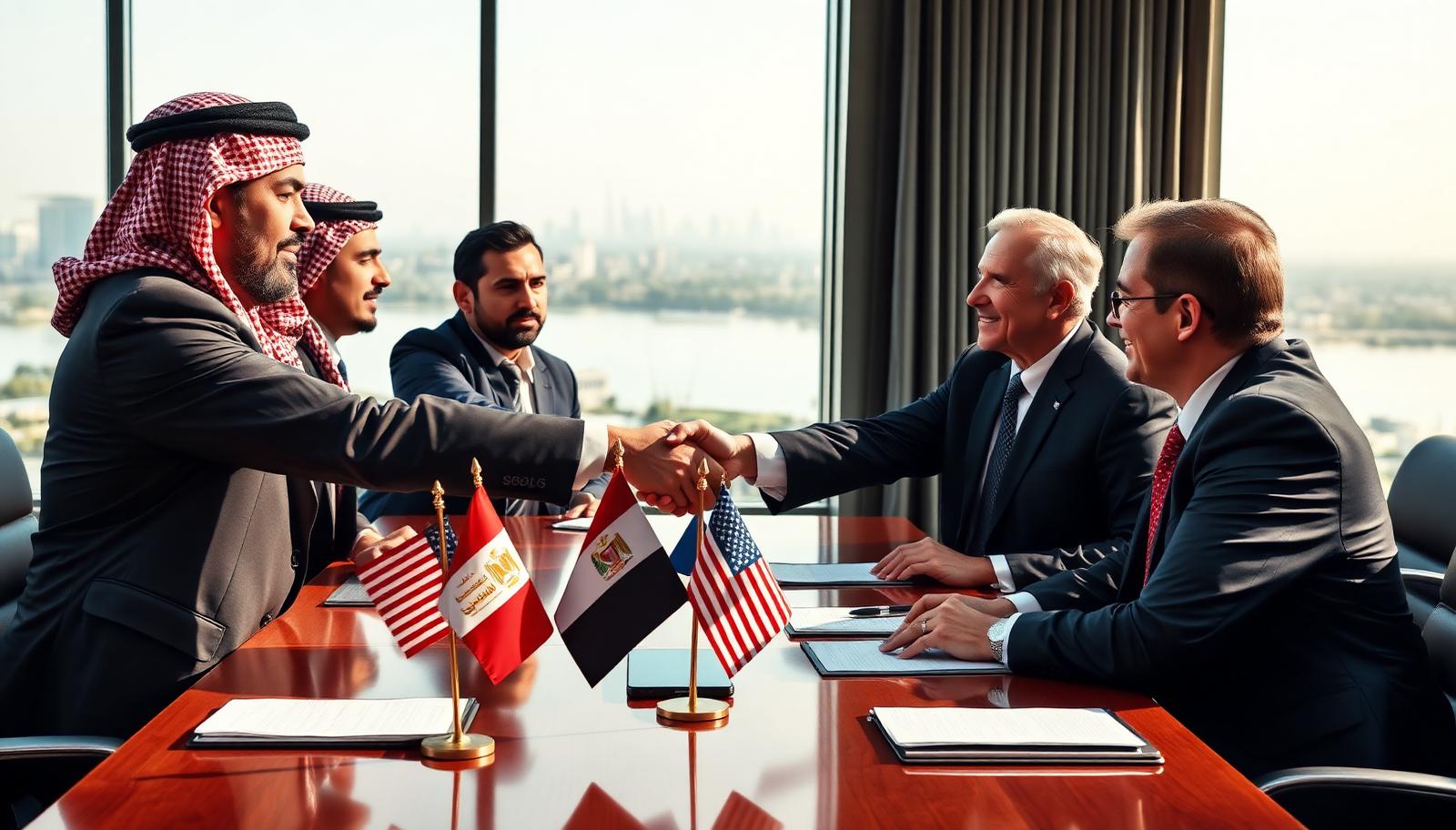
Verified full-year bilateral merchandise trade between Egypt and the United States, reported from Egypt's perspective.
Egypt is one of the largest markets for American goods in Africa and runs a goods deficit with the United States, led by grain, aviation and machinery imports. Egyptian shipments to the US are dominated by apparel — including QIZ-qualified production — fertilizers and processed foods.
These figures represent merchandise trade only and do not include services.
Statistical year: 2024
One of the world's original tourism markets, with major new investment in museums, resorts and aviation capacity.
The pyramids and the largest archaeological museum built for a single civilization.
Temples, royal tombs and the Nile cruise corridor between Luxor and Aswan.
Hurghada, El Gouna and Marsa Alam — diving, resorts and marina development.
Reefs, conference resorts and desert mountain landscapes.
The Bibliotheca Alexandrina, Greco-Roman heritage and the country's second city.
Salt lakes, palm groves and Berber heritage deep in the western desert.
Market size, production economics and trade agreements that reach three continents.
Over 100 million people with rising urban demand across food, healthcare and consumer goods.
A skilled industrial workforce at costs well below Europe and much of Asia.
Duty-free or preferential access to the EU, Africa, the Gulf and Turkey from Egyptian factories.
Manufacturing beside the shipping lane that carries a large share of global east–west trade.
Domestic gas plus rapidly expanding renewables supporting energy-intensive industry.
A large annual output of engineering and IT graduates supporting technology and outsourcing.
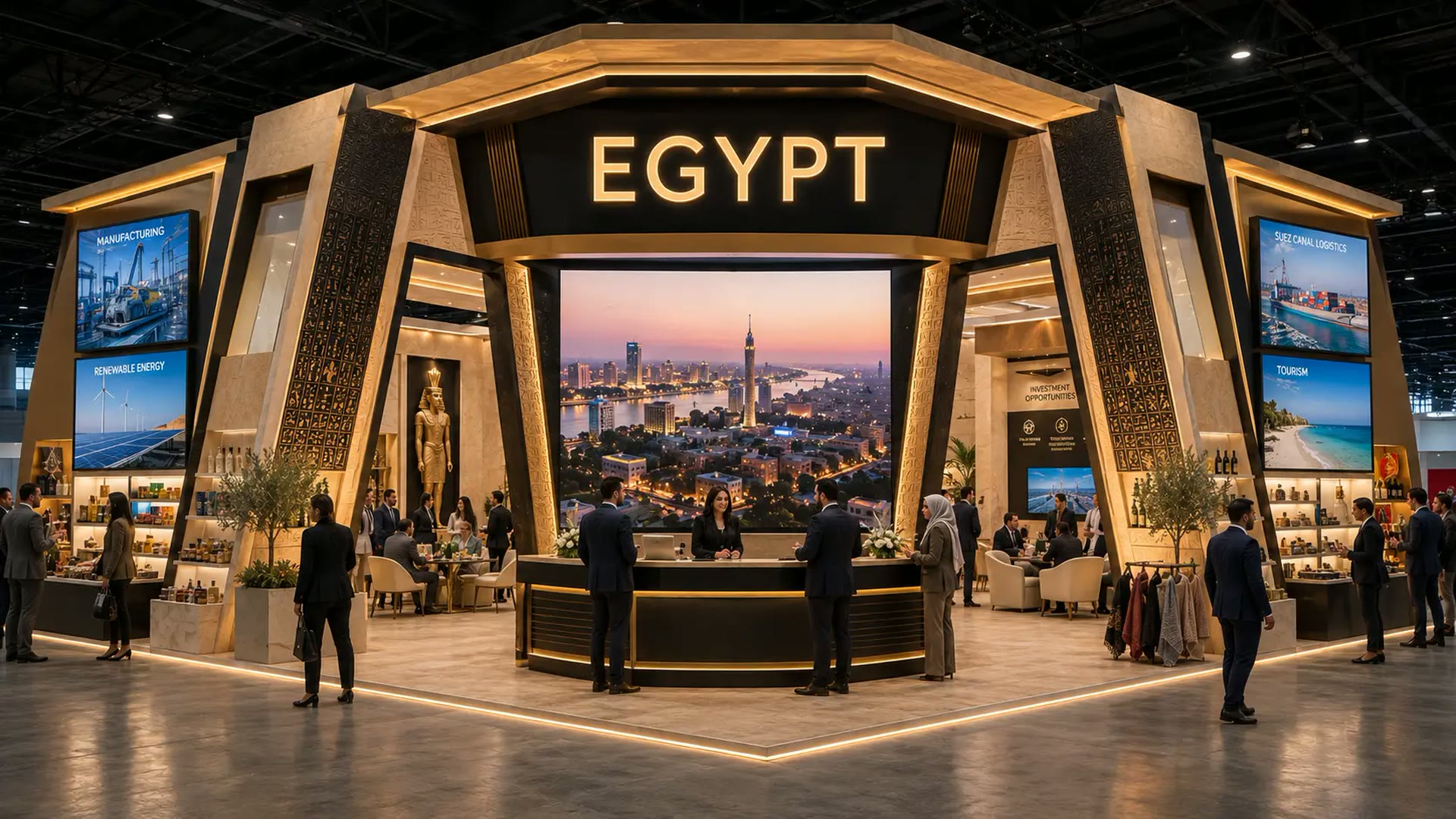
The Egyptian pavilion will present manufacturers, agri-exporters, technology firms and investment authorities to American buyers.
Sites inscribed on the UNESCO World Heritage List, a core part of the country's cultural and tourism offer.
The Great Pyramid, Sphinx and Saqqara step pyramid.
Luxor and Karnak temples and the Valley of the Kings.
Rock temples relocated during the Aswan High Dam construction.
One of the world's oldest Islamic cities, with mosques, madrasas and gates.
An early Christian pilgrimage complex west of Alexandria.
The monastery at the foot of Mount Sinai.
Fossil remains of early whales in the Western Desert.
How companies from different markets can engage with Egypt through the Expo.
Manufacture for export under the Suez Canal Economic Zone regime, or supply energy, agriculture and healthcare technology to a 107-million-person market.
Food security investment, real estate development and industrial joint ventures at scale.
Renewables, green hydrogen, logistics and privatisation programmes across state assets.
Present your country's economy, industries, products, investment opportunities, tourism destinations and culture to the American and North American markets.
Reserve space in the Egyptian pavilion, or register as an American buyer to meet Egyptian manufacturers and exporters.
Last updated: August 2026