Flagship
Green hydrogen & renewables
Hydrom has auctioned vast land blocks for green hydrogen and ammonia, drawing global developers and equipment suppliers.
 Profile content in preparation
Outside the Gulf, on the open ocean.
The only Gulf state with deep-water ports outside the Strait of Hormuz, and a US free trade agreement that makes it a strategic manufacturing and logistics base.
Statistics year: 2024 (latest full-year data)
Oman occupies the southeastern corner of the Arabian Peninsula, with 3,100 km of coastline facing the Indian Ocean and ports that sit outside the Strait of Hormuz — a decisive advantage for supply-chain resilience.
The US–Oman Free Trade Agreement gives duty-free access for qualifying goods in both directions, and Oman's free zones at Duqm, Sohar and Salalah combine that with full foreign ownership.
Vision 2040 is steering investment into logistics, manufacturing, mining, fisheries, tourism and one of the world's largest green-hydrogen programs.
Oman is converting its location, minerals and solar and wind resources into a logistics, industry and clean-energy economy.
Steady, reform-driven growth
By 2030, scaling to 8M by 2050
Duqm, Sohar, Salalah and others
Outside the Strait of Hormuz
Sectors where Omani government bodies, free zones and private groups seek American technology and capital.
Hydrom has auctioned vast land blocks for green hydrogen and ammonia, drawing global developers and equipment suppliers.
Duqm and Salalah offer bonded, tax-free industrial land with direct ocean access bypassing Hormuz.
A national mining strategy opening copper, chromite and industrial-minerals concessions to foreign operators.
The Duqm refinery and Sohar petrochemical cluster driving downstream investment.
A high-value, low-density tourism strategy focused on nature, heritage and luxury resorts.
Investment in aquaculture, cold chain and processing along the Indian Ocean coast.
Vision 2040 sets targets for private-sector share of GDP, Omani employment and non-oil exports, with logistics and clean energy as the two pillars.
Duty-free access for qualifying goods between Oman and the United States.
A national plan for economic diversification and fiscal sustainability.
The state orchestrator for green-hydrogen land blocks and projects.
A diversified, knowledge-based economy with a leading global logistics position.
Large, long-horizon programs with structured international participation.
A 2,000 km² zone with a deep-water port, refinery, drydock and tax-free industrial land.
Multi-gigawatt solar and wind blocks in Duqm and Dhofar feeding hydrogen and ammonia export projects.
A national freight and passenger rail plan linking ports to industrial zones and the wider GCC.
A new sustainable city west of Muscat planned for around 100,000 residents.
Like Bahrain, Oman offers duty-free access under a bilateral FTA — combined with industrial land and ports outside the Strait of Hormuz.
Verified full-year bilateral merchandise trade between Oman and the United States, reported from Oman's perspective.
Under the US–Oman Free Trade Agreement, Oman is a consistent net importer of American goods, particularly aviation, vehicles and oilfield machinery, while exporting refined products, chemicals and manufactured goods to the United States.
These figures represent merchandise trade only and do not include services.
Statistical year: 2024
The most naturally varied country in the Gulf, with a deliberate focus on high-value tourism.
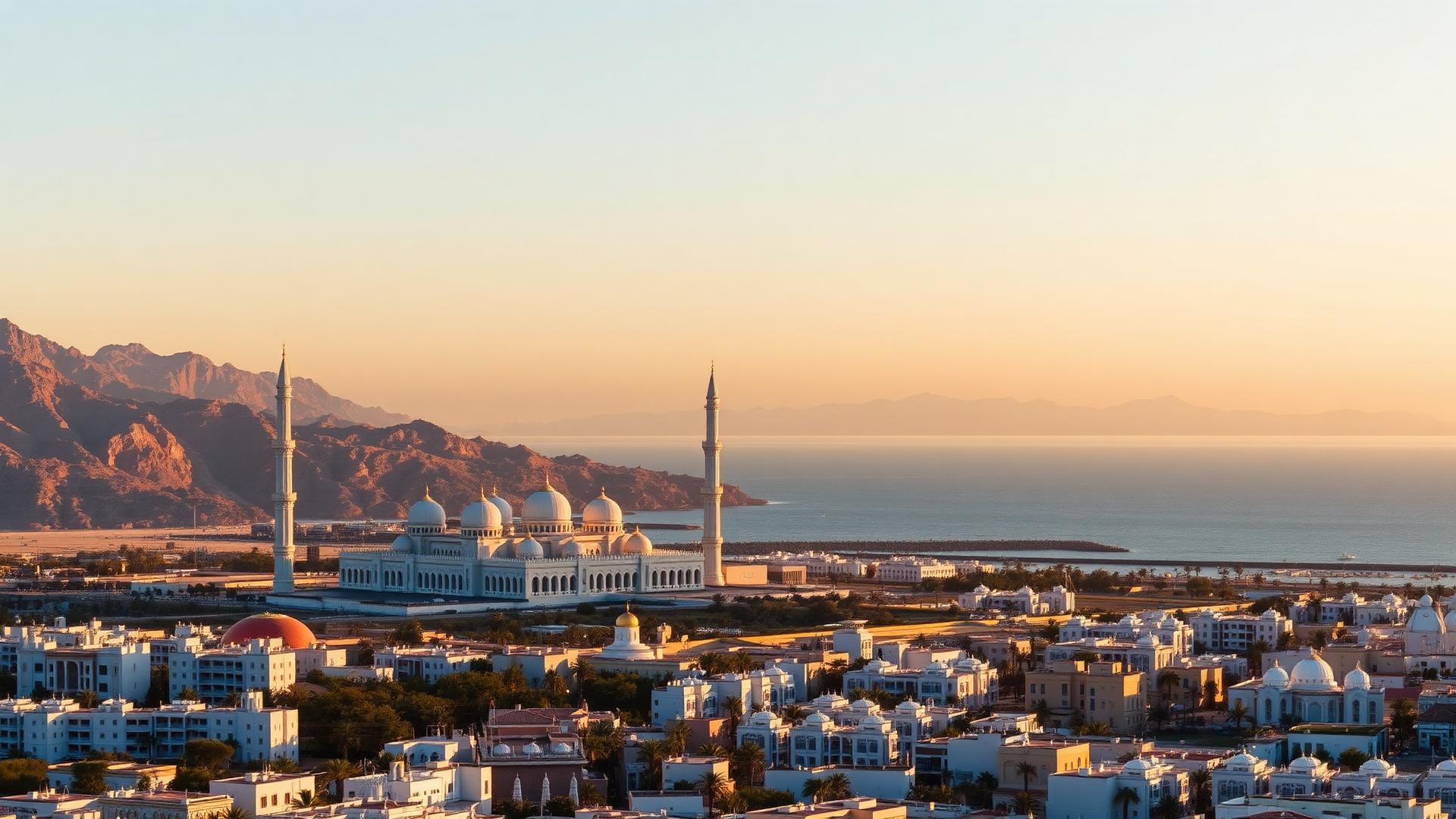
Sultan Qaboos Grand Mosque, the Royal Opera House and a historic harbour.
Terraced villages and canyons at over 3,000 metres.
Desert dunes and a monsoon-green southern coast.
Trade-agreement access plus a location that de-risks Gulf logistics.
Tariff-free access and investor protections under the US–Oman FTA.
Duqm and Salalah keep cargo clear of the Strait of Hormuz chokepoint.
Full foreign ownership, up to 30-year tax holidays and no minimum capital in key zones.
A long record of neutrality and stable, predictable governance.
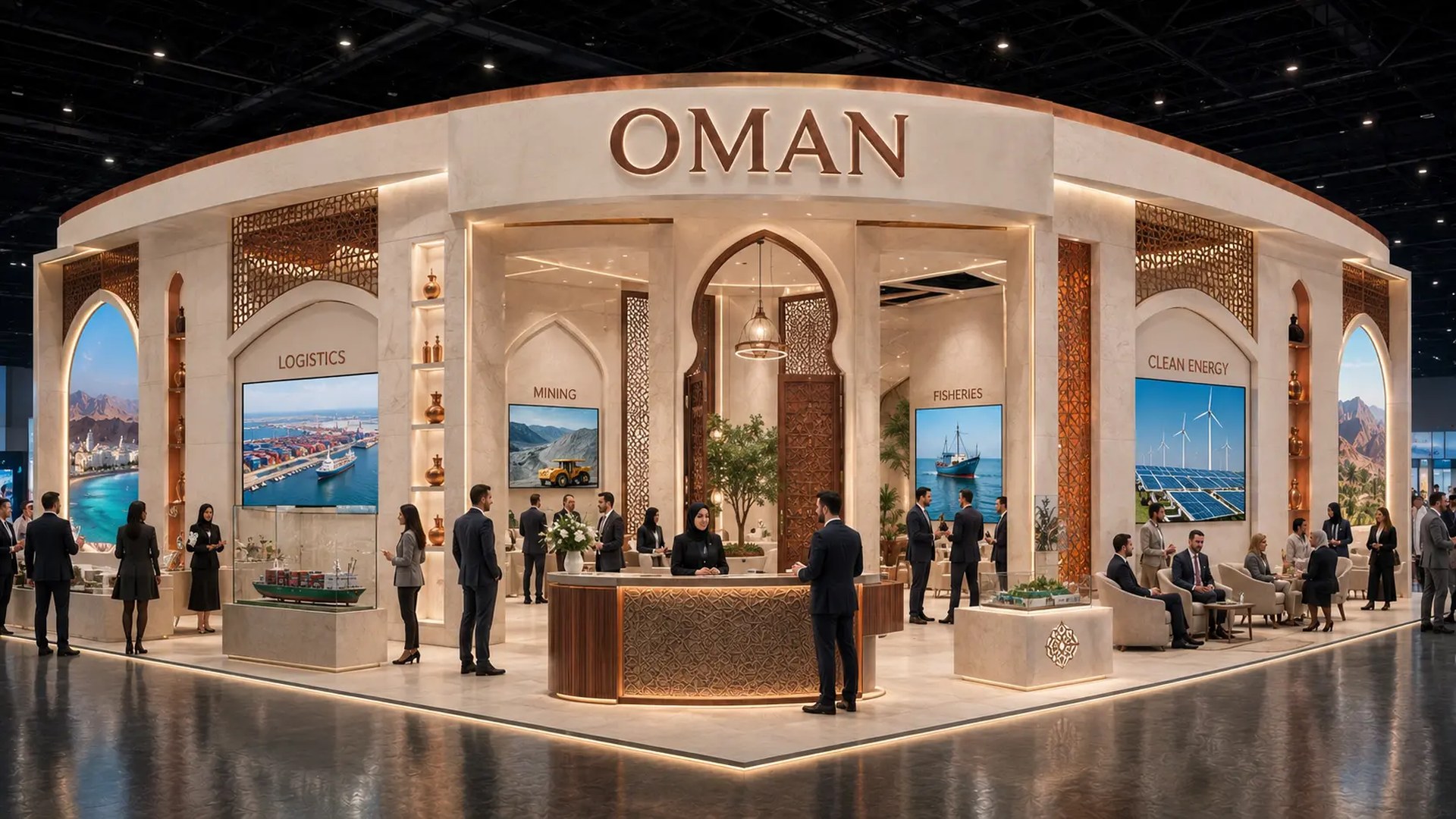
The Oman pavilion focuses on logistics, clean energy and industrial partnerships with American firms.
Sites inscribed on the UNESCO World Heritage List, a core part of the country's cultural and tourism offer.
A massive mud-brick fort and oasis settlement at the foot of Jebel Akhdar.
Bronze Age tombs and settlements from the third millennium BC.
Frankincense trees, caravan oases and the port of Khor Rori in Dhofar.
Ancient gravity-fed water channels still in use today.
A medieval port on the Arabian Sea trading route.
How companies from different markets can engage with Oman through the Expo.
Manufacture in Duqm or Salalah for duty-free export to the US, and supply green-hydrogen and mining projects.
Logistics, fisheries and tourism ventures on the Indian Ocean coast.
Green hydrogen land blocks, mining concessions and port-linked industry.
Present your country's economy, industries, products, investment opportunities, tourism destinations and culture to the American and North American markets.
Reserve space in the Omani pavilion, or register as an American supplier to meet Omani free-zone and energy partners.
Last updated: August 2026