Flagship
Automotive & EV supply chain
Stellantis and Renault plants anchor a supplier base now moving into batteries, wiring, seating and electronics for European and US markets.
 Profile content in preparation
Africa's industrial gateway to Europe.
A US free trade partner with the largest automotive manufacturing base in Africa, deep-water ports on two seas, and one of the world's most competitive renewable-energy programs.
Statistics year: 2024 (latest full-year data)
Morocco sits fourteen kilometres from Europe and anchors the western entrance to the Mediterranean. It has converted that geography into an industrial economy built around export manufacturing.
The country is now Africa's largest car producer, with full assembly plants and a supplier ecosystem of hundreds of tier-one and tier-two firms, alongside a rapidly growing aerospace cluster around Casablanca.
The US–Morocco Free Trade Agreement — the only one the United States holds with an African country — combined with EU association agreements makes Morocco a rare production base with duty-free access to both markets.
Manufacturing, phosphates, agriculture, tourism and renewable energy give Morocco an unusually balanced economy for the region.
Second-largest economy in North Africa after Egypt
Largest car manufacturer in Africa
The largest reserves on earth
Targeting 52% installed capacity by 2030
Sectors where Moroccan industrial groups, agencies and manufacturers actively seek American technology, capital and offtake.
Stellantis and Renault plants anchor a supplier base now moving into batteries, wiring, seating and electronics for European and US markets.
Over 140 aerospace firms near Casablanca producing structures, wiring and engine parts for Boeing, Safran and Airbus tiers.
The Noor complexes and Atlantic wind corridors underpin a national green-hydrogen offer aimed at European industry.
OCP Group is investing heavily in green ammonia and specialty fertilizer capacity for global markets.
Citrus, berries, tomatoes, olive oil, canned sardines and argan products with established export logistics.
French, Spanish and English-language contact centres, engineering and IT services serving Europe and North America.
Morocco's development model targets higher-value industry, near-universal renewable power and world-class logistics infrastructure.
The only US free trade agreement with an African country enters into effect.
One of the world's largest concentrated solar power complexes comes online.
The port becomes the largest container terminal in Africa and the Mediterranean.
Co-hosting the FIFA World Cup with Spain and Portugal, driving stadium, rail and hotel investment.
Public and private programs that open procurement and partnership opportunities.
Africa's largest container port with over 9 million TEU capacity and integrated free zones serving 180 ports worldwide.
Extending the Al Boraq line from Kenitra to Marrakesh ahead of the 2030 World Cup.
A national framework allocating land and infrastructure to large-scale green hydrogen and ammonia developers.
Stadiums, airports, hotels and urban transport across six host cities.
A new deep-water port and industrial zone on the Mediterranean coast.
Large plants at Casablanca and Agadir addressing structural water stress.
Two-way goods trade between the United States and Morocco is worth several billion dollars a year, with the FTA eliminating tariffs on the large majority of products.
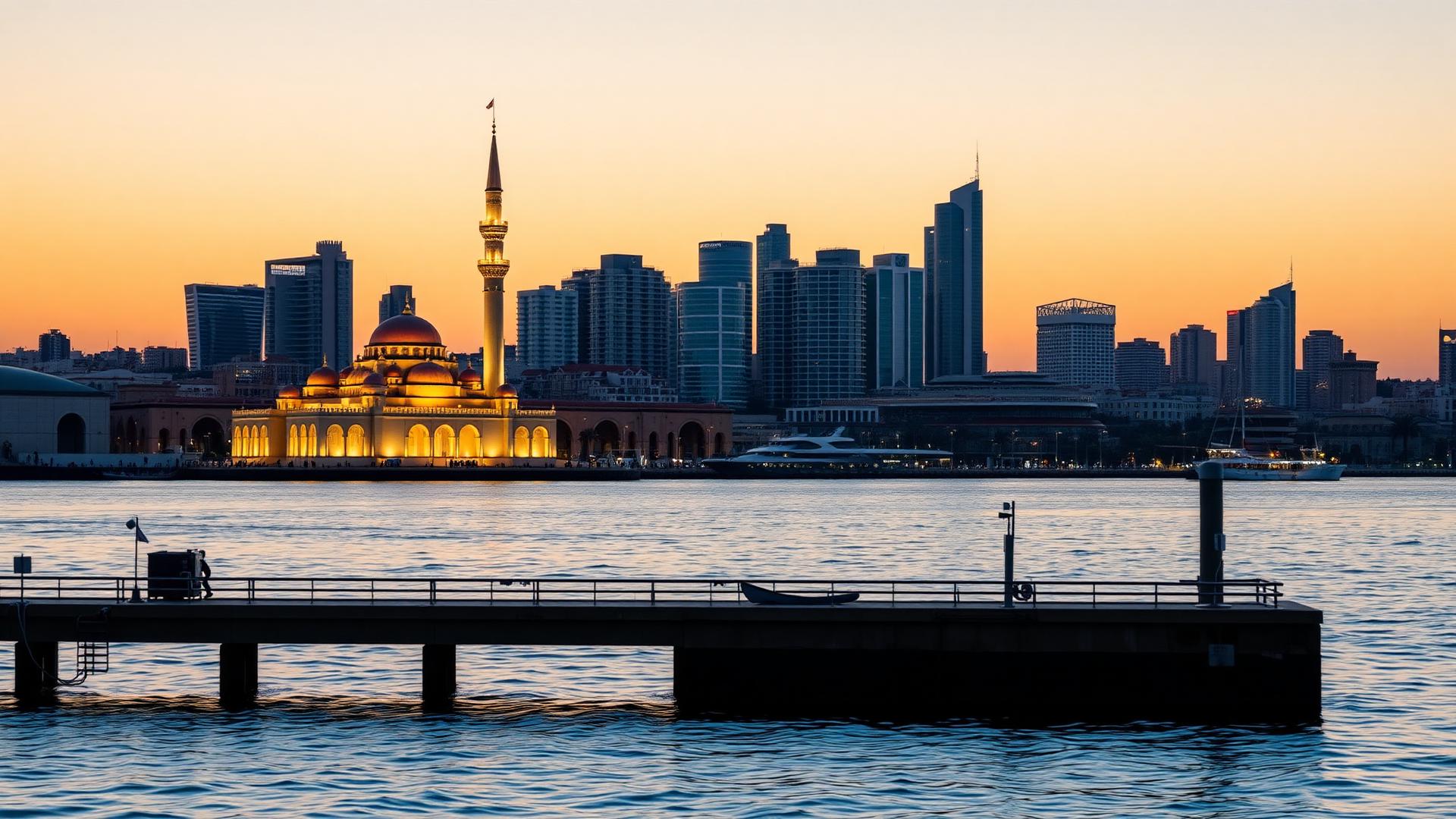
Verified full-year bilateral merchandise trade between Morocco and the United States, reported from Morocco's perspective.
Under the US–Morocco Free Trade Agreement, Morocco has become one of America's largest markets in Africa, running a goods deficit while building export capacity in fertilizers, automotive wiring and aerospace components destined for the United States.
These figures represent merchandise trade only and do not include services.
Statistical year: 2024
One of the most visited countries in Africa, with record arrivals and rapid hotel investment.
The medina, Jemaa el-Fnaa and the Atlas foothills — the country's tourism anchor.
The world's largest car-free urban area and the oldest continuously operating university.
The blue-washed mountain town, one of Morocco's most photographed destinations.
Windsurfing, fishing ports and resort development along the Atlantic.
Erg Chebbi dunes and desert camp tourism.
A stable, industrialised platform with tariff-free reach into two of the world's largest consumer markets.
The US FTA and EU association agreement let one plant serve both markets duty-free.
Automotive and aerospace clusters already meeting OEM quality standards at scale.
Some of the lowest-cost solar and wind generation in the world.
Tanger Med connects to 180 ports, with three-day transit to most of Europe.
A predictable legal environment and a long-standing US treaty relationship.
Technical institutes producing engineers and technicians for industry at competitive cost.
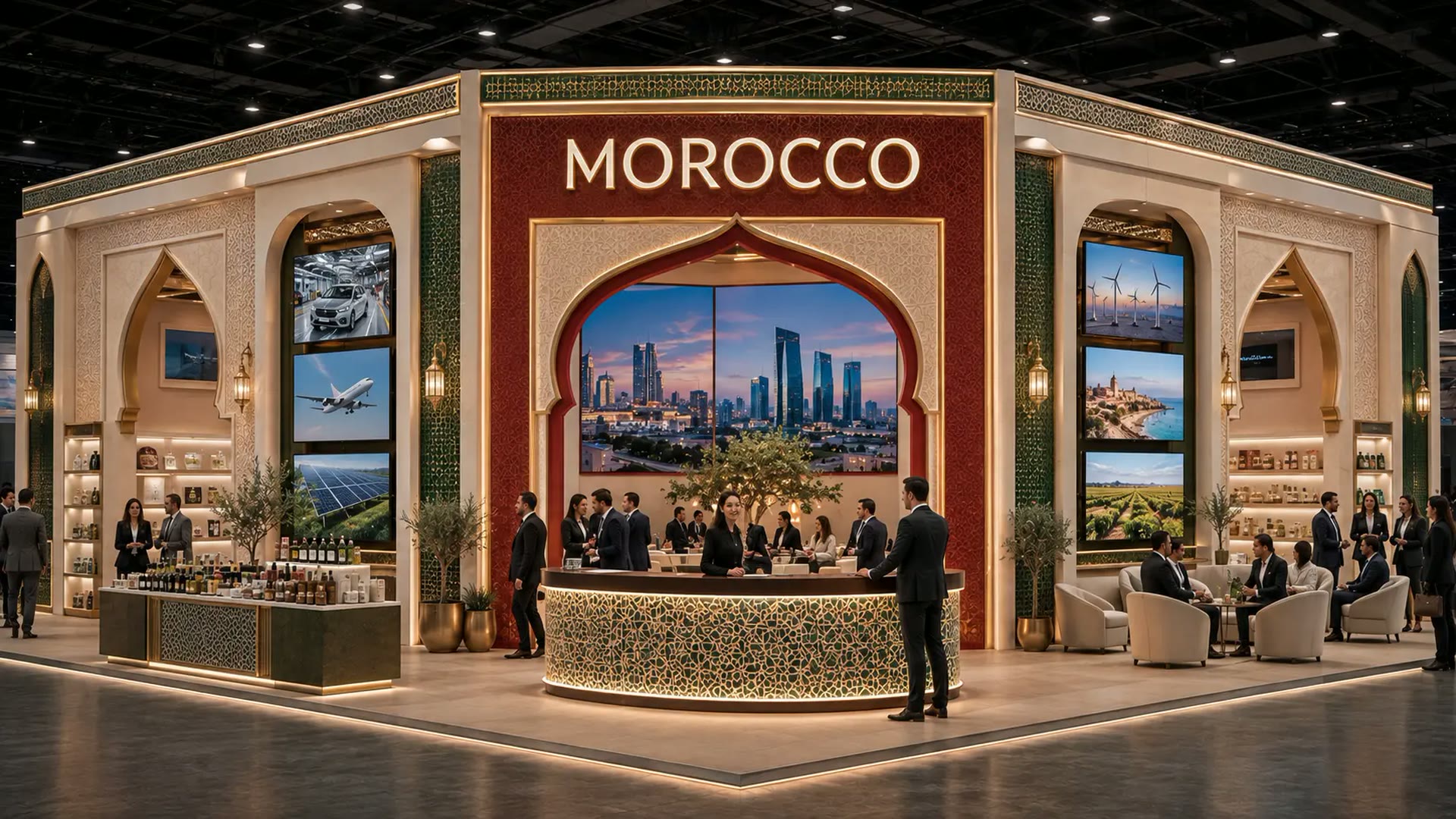
The Morocco pavilion presents an industrial economy that American manufacturers can use as a dual-market production base.
Sites inscribed on the UNESCO World Heritage List, a core part of the country's cultural and tourism offer.
A vast medieval urban fabric of souks, madrasas and tanneries.
A 12th-century imperial capital with the Koutoubia minaret and Saadian tombs.
A fortified earthen village on the former caravan route to the Sahara.
The 17th-century imperial capital of Moulay Ismail.
The best-preserved Roman city in Morocco.
Andalusian-influenced walled cities on the Mediterranean and Atlantic.
How companies from different markets can engage with Morocco through the Expo.
Establish a near-shore manufacturing or assembly base with duty-free re-export to the US and EU, or supply capital equipment to automotive, aerospace and renewables projects.
Use Morocco as a production and distribution gateway into West Africa under AfCFTA and into the European single market.
Green hydrogen, desalination, high-speed rail and World Cup infrastructure offer long-horizon concession and EPC opportunities.
Present your country's economy, industries, products, investment opportunities, tourism destinations and culture to the American and North American markets.
Reserve space in the Moroccan pavilion, or register as an American company to meet Moroccan manufacturers, exporters and investment agencies.
Last updated: August 2026